

10 rules of golf etiquette
10 rules of golf etiquette
While board protocols may vary from one organization to the next, these are the most common guidelines for general board etiquette. Board etiquette helps boards observe ethical and legal requirements, and it also makes the board meetings more effective before, during, and after the meetings https://buffalo-slot-machine.net/. The board also becomes more efficient.
In order to have effective discussions, a board meeting must be well-structured. One way to do so is by utilizing Robert’s Rules of Order for board meetings. Besides the recommendations above, here are other best practices to take note of:
There are always outstanding ideas in meetings, but how do we implement them in life? Robert’s Rules of Order helps to go through the formal proposal procedure. In just a few simple steps, you can turn your proposal into a motion.
Robert’s Rules of Order is a lengthy manual of parliamentary procedure that governs most boards of directors, which was first created in 1876 by Henry Martyn Robert as an adaptation of the rules and practices of Congress. With the latest versions of the manual totaling around 700 pages, a Robert’s Rules of Order cheat sheet is useful for highlighting the most common processes used by today’s boards.
Rules of fence etiquette
Taking Down Trees – Gottsman advises taking care that your trees don’t droop or hang into the neighbor’s yard leaving a mess of berries, leaves, and pinecones underneath. Your trees should be your own yard’s problem, but draw the line when they start affecting those around you.
When turning your shared fence agreement into reality, Fence OKC ensures a seamless process. As one of Oklahoma’s most reviewed and trusted fence contractors, we’ve served the community since 2011, providing top-notch fence installation services prioritizing harmony, quality, and customer satisfaction.
Regardless of the unique nuances of your fence dilemma, Gottsman says taking the right approach with neighbors is always the best way to start. “Communicate kindly and positively in order to make a responsible decision which will affect other people,” she says. “The quote ‘Good fences make good neighbors’ implies a respect for boundaries and the people living behind the fence.”
You don’t need to show them your design, as they might not like it (it isn’t in their control), but it shows that you care about their feelings. They might even be willing to split the installation cost with you! The only problems that might arise are if the fence lowers their property value or is dangerous.
One of the most important aspects of fence etiquette is communication. Informing your neighbors about your plans can prevent misunderstandings and foster goodwill. Here are some tips for effective communication:
10 golden rules of email etiquette
Part of email etiquette is knowing when to respond, how often, and when an unanswered email means “no.” This is especially true for job seekers. Use a three-email approach. The first email includes your resume and cover letter. If you don’t receive a response within a few days, send a short and succinct follow-up and reattach your resume. Crickets? A week to ten days after the initial email, send one more follow-up by forwarding your first email without attachments. The reason that you do not include attachments on the final follow-up is to break through spam filters that filter emails with attachments.
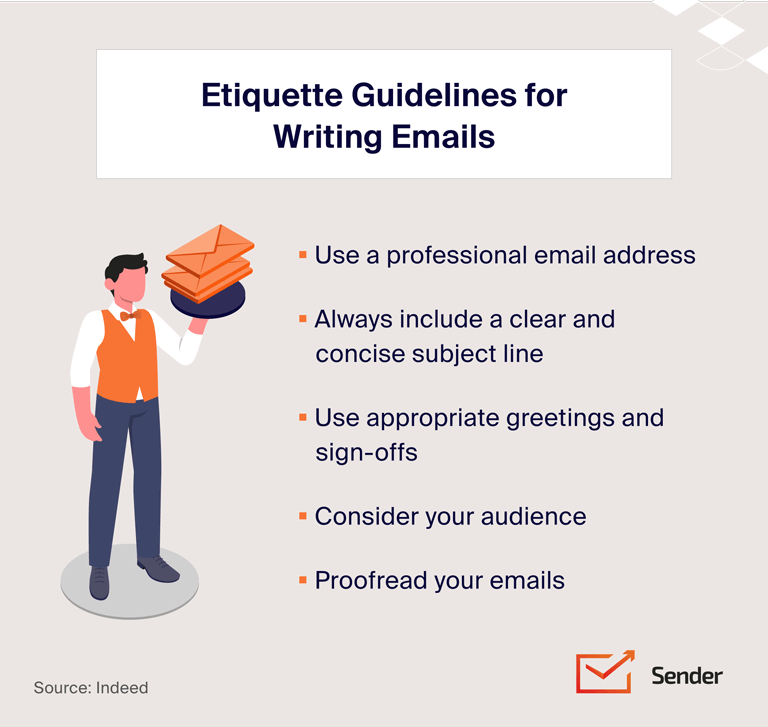
Your email sign-off is the last thing your recipient sees, so it’s your final chance to leave a positive and professional impression. Over the years, I’ve realized that a thoughtful sign-off can make your email more memorable and set the right tone for future communication.
Email etiquette, often referred to as email courtesy, provides essential guidelines for effective communication in both professional and social contexts. The etiquette varies depending on your audience and the tone you’re aiming for.
It’s a good practice to write the contents of your email first to prevent accidentally sending it prematurely. By writing first and then reviewing, you reduce the risk of errors and ensure that the email is sent to the intended recipient with the correct information.
Part of email etiquette is knowing when to respond, how often, and when an unanswered email means “no.” This is especially true for job seekers. Use a three-email approach. The first email includes your resume and cover letter. If you don’t receive a response within a few days, send a short and succinct follow-up and reattach your resume. Crickets? A week to ten days after the initial email, send one more follow-up by forwarding your first email without attachments. The reason that you do not include attachments on the final follow-up is to break through spam filters that filter emails with attachments.
Your email sign-off is the last thing your recipient sees, so it’s your final chance to leave a positive and professional impression. Over the years, I’ve realized that a thoughtful sign-off can make your email more memorable and set the right tone for future communication.
10 rules of golf etiquette
Because time is our most valuable commodity, there are few good reasons for breaking a golf date. Deciding last-minute to clean the garage on Saturday, or getting a call that the auto-repair shop can move up your appointment by a day, just doesn’t cut it.
Even with the advent of spikeless shoes, the etiquette rule of never walking in someone’s line of play on the putting green is an absolute. The area around the hole in particular is sacred ground. The first thing to note when you walk onto a green is the location of every ball in your group, then steer clear of their lines to the hole.
Golf is a great game, and it can be especially rewarding if you’re new to it. To ensure that your experience is enjoyable for everyone involved, some rules of golf etiquette must be followed. First and foremost, before the round starts, ensure everyone in your group understands what type of golf game you’re playing – match play, stroke play, etc. It’s also important to decide if you’re giving putts or not and what happens when someone goes OB – these things should be discussed at the beginning of the round.
Remember the old staples of getting around in good time: Play “ready golf” (hit when ready, even if you aren’t away) until you reach the green, be prepared to play when it’s your turn on the tee and green, and never search for a lost ball for more than five minutes.
Another essential rule involves understanding the procedures for out of bounds, often marked by white stakes or lines. If your ball travels beyond these markers, replay your shot from the original position with a penalty of one stroke.